Marlow’s Blog Post Archive

Dedication and Fire

It’s Imbolc again. Every time the wheel turns I feel a deep sense of the familiar; the time of year, the inevitable reflection upon all that has transpired between this time of year and last, the opportunity to re-acquaint myself with all that this Festival is about; Fire, New Beginnings, Creativity, Poetry, Smith craft and Healing.

Thankfully the Fire has returned!

I am reminded of yet another traditional theme of this Esbat. Imbolc, as one of the cross-quarters of the Celtic calendar, is also traditionally understood to be a time of consecration and dedication. It is a time to initiate new projects and ‘seed through action’ that which we seek to manifest in the coming cycle. It’s time for blessing and acknowledging our tools, whether they be spade and hoe, pen and paper or hammer and forge. The burgeoning of Spring is, in fact, everywhere; Snowdrops are in full fledge, buds are budding. It’s so easy to see the life force rising in nature, but what of this thing called Dedication? Consecration?

This year, in anticipation of the celebration, I have been casting about looking for what it is that needs to be consecrated in my world. I have been made aware, in the past few weeks, of quite how deep and dark and turbulent the winter has been, more perhaps, a description of my inner landscape than without. Uncertainty, isolation, impatience for new growth and signs of life; the very real cold has never been far from my door. It dawned on me today that rather than a tool or a ‘thing’ it is I who needs, indeed yearns for that consecration; it is I, that rising from the cold dark time of winter past, needs to honour the fire within and burn-off the doubts, fears and anxieties that have taken hold. It is I, that seeks re-dedication; to hope, to life and to trust. In the past I have been able to relate to and embrace the poetic, the healing aspects of Brigid’s Feast Day. This year I am learning about the hammer and the forge, not through the smithy but rather through the furnace of life. It is I upon the forge, it is I swinging the hammer but it is the Goddess in the Fire.

And so, I shall begin again, remembering that I have everything I need for the creation of new life. These next weeks will not be a time for complacency, these tender shoots will require constant tending and protection. But for now, for today, I dedicate myself anew to trust, hope and an abiding sense of connection to all of creation.

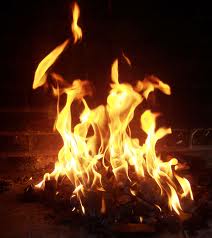
After all, Spring IS on it’s way!Imbolc fire

Homoeopathy for the Home

Kitchen Table Homoeopathy with Marlow Purves

It’s the new year and new ‘things’ are brewing!

Beginning January 24th, I will be teaching a five week introductory course in Homoeopathy for the Home at Linton Village College.
 
Join me and learn about 36 basic first aid remedies that can be used to treat a wide range of common and acute ailments, gently, safely and effectively.

Practical effective treatment based on age old principles; treat yourself and your loved ones with confidence.

We have a lot of fun and cover a wide range of topics in contemporary healthcare.

Make 2013 a year to take stewardship of your health! 

For more information and to register: http://lvcacl.co.uk/?wpsc_product_category=health_and_fitness

Looking forward to seeing you there!

Homoeopathy and Physiotherapy

Homoeopathy and Physiotherapy

Physiotherapy is generally reckoned to be a physical treatment focused on mechanical injuries and remedial exercise regimens. Often the impediments to treatment lie in the effects of acute inflammation and occasionally the tearing or damage to soft tissue. Homoeopathy finds its place in just such cases and therefore provides an ideal complement to structural re-education and manipulation.

Anti-inflammatories and painkillers sometimes mask symptoms and thereby predispose one to further injury due to lack of awareness of the extent of the damage. Drowsiness and addiction due to medication also concern those who experience repeated injury patterns.

Homoeopathic remedies prove invaluable allies in the treatment of a traumatic injury, muscle strain or damage to soft tissue. They are safe, gentle and effective and have been proven for over 200 years.

Remedies for Injury or Trauma –

Arnica – Damage to soft tissue, bruising, shock, swelling, internal bleeding. It is the number one remedy to consider in head injury or concussion.

Bryonia – Severe pain from broken bones. Joints that are red, swollen and hot and much WORSE for the least movement. Dryness. Swelling of elbows and stiff and painful knees. These complaints come on slowly as opposed to being a result of a dramatic injury pattern. The pains are much better for hard pressure.

Hypericum – Commonly known as St John’s Wort, Hypericum is a per-eminent remedy for damage to nerve endings. It is particularity useful post-epidural or where there has been crushing injuries to parts rich in nerve endings. Bites, shock, dental work or lacerations. It also has a particular application in the case of injury or concussion of the spine or coccyx.

Rhus Tox – Sprains, strains, damage to fibrous tissue, joints, tendons and sheaths producing pain and stiffness. The person may be restless and much better for slow continued motion rather than being still. First of the season strains where the muscles are unused to work and stiffness is a keynote feature.

Ruta Grav – Injured or bruised bones, a wonderful remedy for strained flexor tendons, joints, ankles, wrists and cartilage. Lameness after strains. Specific affinity with damage to wrists and small joints.

Homoeopathic remedies are available as part of Homoeopathic First Aid kits or over-the-counter in health food shops and pharmacies, they can make all the difference in terms of time ‘off the pitch’. In the event of an injury, consult a qualified physiotherapist and remember the magic of the minimum dose!

Whooping cough vaccination in Pregnancy – A second look

A hot topic in the media and in my practice these days seems to be centred around the launch of the campaign to vaccinate pregnant women against whooping cough. I am receiving lots of enquiries and questions about this latest fashion in antenatal care.

Whooping cough, for those of us who have never seen it or really know what it ‘looks like’ is an illness that is typically found in children, though adults do experience it too. It is typified by a paroxysmal cough that is intermittent and characterized by a violent cough followed by a distinctive ‘whoop-ing’ sound. The cough, which is exhausting, can also be accompanied by vomiting of mucous. The symptoms, if left untreated, can continue on for up to three months. The illness is associated with the Bordetella pertussis bacteria. Whooping cough is not generally considered to be fatal though it has been associated with deaths in very young infants (0-3 months of age).

So, now we know what we are talking about, right?! Here’s the current situation. In the past year in the UK, there have been ten deaths attributed to whooping cough in infants. I have not been able to track down whether or not these infants had already been immunized or not as there doesn’t seem to be any publicly-available record of their ages or their over-all state of health. It is an horrific and sorrowful thought that small children should succumb to such an illness, though it is considered too dangerous to vaccinate babies before two months of age: quite simply they do not have an immune system sufficiently well-developed to cope with the direct effects of the vaccine itself. The solution to the problem of vulnerable children under the age of two months is to vaccinate their mothers while they 28-38 weeks pregnant.

OR NOT…

In the final months of development in utero, the lungs are developing and the organs are coming on-line in preparation for the new adventure.

For the most part, we as women strive to ensure our highest levels of self-care during our pregnancy. We eschew alcohol, take supplements, make sure we sleep as much as possible and see our mid-wives and doctors regularly. We quit smoking and may begin ante-natal yoga classes for relaxation and overall health. Books inform us that long-distance travel poses threats and that a calm mummy makes for a calm baby. It is confusing, therefore, that we find conventional medicine advocating the injection of Repevax (the trade name of the vaccine), which supposedly confers immunity from diphtheria, pertussis, tetanus and polio. It is, in fact, a quadruple vaccine though we are only told about its application in view of pertussis (whooping cough) in its application in pregnant women. The pharmacological literature says that it is not recommended for children under three years of age or who have not received their first immunizations. It is a highly controversial vaccination even for it’s ‘target’ market and has been linked with many symptoms such as convulsions, brain damage, anaphylactic shock, among others. (DPT:A Shot in the Dark, B.L.Fischer and H.L. Coulter, 1985).

There is solid clinical evidence to suggest considerable risks and downsides to the pertussis vaccine in infants, and there is no evidence to suggest that this vaccine does ‘what it says on the label’. As happened with Thalidomide, women and their unborn children are once more being used as test cases for a theory.

“…the vaccine was judged to work less than three-quarters of the time (New England J Medicine, 1995; 333: 1045-50) and it was only 55 percent effective after two doses.” The Vaccination Bible, Ed. Lynne McTaggart, WDDTY 2000.

The other question that emerges in some of my conversations is, ‘why are we doing this?’ Are we, in effect, vaccinating to allay parents’ fear of whooping cough rather than because it is known actually to be effective?

By far the single most effective protection against childhood illness (and free at the point of delivery!) is breast milk. Breast feeding confers immunity through the mother’s own system for the most vulnerable months of our young lives: natural immunity that is adaptive in the way that artificial immunity is not. If the symptoms of whooping cough do develop, homoeopathy has a number of extremely well documented remedies to offer. Homoeopathy has been used to great effect for over 200 years providing safe, gentle AND effective healing, regardless of age..

Trick or Treat and the Old Ways

Trick or Treat. What connection can this have to the old ways? Wandering from door to door begging or ‘souling’ for food and fuel in return for a blessing upon those who have crossed over, we pay homage to our ancestors. Embedded in our understanding of life, in times past, we have always been supremely aware of our relationship to our ancestors and to those who have passed before us. An essential part of that remembrance comes in sharing food and sustenance. As life is associated with eating, so we symbolically feed the ancestors. In cultures all over the world throughout history there is a tradition of leaving food for the ancestors, in Japan, China, Egypt, Australia, the Americas. This custom not only links us to those who have gone before, but it is an assurance that when we pass, we too, will be enfolded in the memories and the traditions of our descendants.

Hallowe’en or Samhain (pronounced ‘sow-en’) is the third of the harvest festivals in the Celtic calendar where we salvage the seeds and take them into ourselves by literally eating them and saving some for planting in the Spring. By bringing the concentration of life force distilled in the seed into ourselves, we symbolically draw all that is most precious within while the seeds that we preserve for the next planting are invested in the promise of yet another sowing, another harvest.

As darkness grows and the sun recedes we enter a dangerous time – scarcity, cold and inevitable contraction. Samhain marks the tipping point into the darkening of the year. It is the moment when the veil between the worlds is thinnest offering us an opportunity to connect with the departed and renew our relationship with the dark; an acknowledgement of spiritual immortality and human frailty. During this powerful time of shadows and few definitions, dreaming and surrendering are the tasks that we are charged with.

Reach now for the guidance and support of those who have passed this way before. Prepare mindfully a place at your table for the ‘Gone Befores’.

Blessed Samhain.

Plutonium, Poetry and Purple – A New Face of Homoeopathy

Arsenic for your gripe tummy? Mercury for your mouth ulcer? Belladonna for your headache? Alas, we are not slumbering. Our ailments are becoming more and more sophisticated and complex as we move into the 21st century and our cures are evolving to match them. This is the bad news.

Based on the premise that Like cures Like, homeopathy was conceived about 200 years ago in the mind of German physician Samuel Hahnemann. Homeopaths prescribe remedies not because of their ‘active ingredients’ but because the symptoms these remedies can cause in a healthy person are the same symptoms that may be cured in one who is ill. Rather than just taking an isolated body part or disease diagnosis upon which to base a prescription, the ‘symptom’ picture is a carefully collected amalgam of the WHOLE of the person’s state – a snapshot of the person at that point in time. It is with this picture in mind that the homeopath then sets to work to discover the remedy that matches the symptoms of the person in front of them. Known as the “similimum,” this remedy serves to cancel out the original symptoms in the person.

Now, this is where the controversy really heats up! Arsenic? Belladonna? Mercury? When is a poison not a poison? The answer lies not in the question of substance but rather, in the quantity of the substance. Conventional wisdom–or at least our consumer culture–would have us believe that more is better. Not so with homeopathy, where less is often enough. In fact, through trial and error Hahnemann and subsequent generations of homeopaths have discovered that not only have its remedies been repeatedly proved and cures effected, but the tenets upon which the science and art were founded have also been proven to hold true.

The ‘twist’ in terms of homoeopathic application is partly found in the preparation of the remedies. Hahnemann was all too aware of the dangers of giving crude mercury or arsenic to people (though it was a usual practice of the day). Through rigorous methodology, he contrived to experiment and see just how dilute a substance might be in order to retain its efficacy and annul the potential for poisoning. He observed unexpected and yet reliably repeatable outcomes. Not only was the efficacy and value of the remedy maintained when the raw material was diluted and shaken repeatedly (succussed) but the depth and action of the remedy was exponentially enhanced. He deduced over time and much practice that the relative strength or “potency” and value of the remedy are not based on the amount, but on matching the frequency or resonant field of the substance with the individual. The issue of medication thus became one more of quality than quantity. Homeopathy is a relational therapy based on matching the remedy with the patient rather than assuming that the medicine has an independent action of its own. This was, and to some extent is still today, a radical departure from what we like to think of as pure ‘objective science.’

Two hundred years of history and empirical evidence have not diminished the validity of the concept of Like cures like. Environmental toxicity, electro-magnetic pollution, hormones recycled into our water systems and microwave radiation emitted by the ubiquitous cell phone are all features of the new normal. The pace of life and the stress of meeting all the appetites of our modern world within tight schedules and tighter budgets are increasing. Is homoeopathy still a relevant therapeutic modality?

Ill health may be characterized by burn-out, sleep disorders, anxiety, depression, disconnection from self, auto-immune disorders, ever increasing rates of heart disease, cancers and chronic non-specific yet debilitating illnesses. There is a growing disparity between our picture perfect world and just feeling as though we can survive. People in communities, most particularly large urban centres, are suffering from a loss of sense of purpose and lack of connection to nature and natural cycles. The media and internet give us access to a wider world, beckoning us into an age of information overload and over stimulation that often alienates us from the here and now. This is the bad news.

Before we fold up our shop fronts and withdraw from all that our evolution has led us to, it’s important to remember that, within the vast expanse of our material, emotional, mental and spiritual realities, remedies already exist for our dis-eases. The last 20 years in particular have seen a remarkable resurgence in homeopathic provings–the process by which the healing potential or ‘symptom picture’ of a substance is derived. Today there are more than 6000 remedies in the homoeopathic pharmacopeia (and more are being proved or ‘discovered’ every day) made from all manner of substances. The frontiers of imagination are visited and homoeopaths are returning from these explorations with whole new tool kits to match our new reality. Not only found in the animal, mineral and vegetable kingdoms of the past; today we also have remedies garnered from more and less intangible sources including Berlin Wall, the colour Purple, and even elements such as Plutonium! Recitations of poems have been made into remedies found to ‘match’ and ‘cure’ a range of symptoms as abstract and diverse as a sense of schism or fracturing in the personality to more concrete circumstances such as infertility, ovarian problems and symptoms associated with menopause. Plutonium, normally associated with bombs and nuclear power production, finds its curative profile met in conditions such as learning disabilities, dyspraxia, leukemia, lymphomas, skin lesions and burning pains often associated in conventional terms with radiation sickness. The proving of the colour Purple yields symptoms such as heart disease and suicidal tendencies to specific ailments such as glandular dysfunctions affecting the thyroid.

The evidence of cured cases suggests that we are provided with all that we require to recognise and meet the demands of our evolving world. Homoeopathy is essentially a relational based discipline; it mediates the person with the substance in order to affect a cure. Homoeopathy, which moves us towards a more conscious engagement with our relationships to ourselves and the world around us, provides a potential stepping stone when we get stuck or blocked on our course. This is the good news.