The Gardener’s Apothecary

Apothecary Plant images

The Gardener’s Apothecary

We’ve been waiting for such a long time and finally encouragement is coming from the garden. A few degrees warmer temperatures and a little bit of sunshine seems to be all we need to woo us into our over-wintered bits of paradise.

Joyous reunions, plans for sowing, the promise of colours, scents and home grown delights have us reaching for spade, fork and trowel. We often seem to fall prey to a sort of collective amnesia at this time of year, so eager are we to be in the dirt, our bodies have forgotten the toll exacted by the labour of planting, mowing and mulching.

Fresh air, fragrant earth, mellow sunshine BLISS — All of earth’s energies are pointing up and so many shoots are making their way skyward. With such a riot of life making itself visible it’s difficult to pace ourselves in our endeavours to match it. Warning a gardener NOT to overdo it is a little like saying, ‘Drink slowly’ to one who has just crossed a desert!

Commonly the results of our first forays into the garden leave us feeling a little worse for wear – strained and over-used muscles, bruises, wear and tear, a chill from having over stayed our time can interfere with the best laid plans of the most seasoned among us.

Homoeopathic remedies come into their own in these circumstances and are a gentle, safe and effective cure allowing us to return tomorrow and the next day to our little bits of Eden.

These common remedies are made from plants that may well appear in our gardens, proving the maxim that ‘everything we require for healing is provided for’. They are commonly found in health food stores and Chemist’s shops. All remedies with the exception of Calendula are in pill form and to be taken internally. They are safe for pregnant women, children and the elderly.

ACONITE – Monkshood

For the effects of exposure to cold winds. Sudden violent onset of fever, earache or headache. This is an acute and extreme state that may also be accompanied by fearfulness and palpitations.

ARNICA – Mountain Daisy

An old friend for the gardener. Useful in the event of over-strain and injury, bruising or damage to soft tissue. Arnica is indicated in one who has worked beyond their capacity (who me?!) and insists all the while that they are fine, even when it is very apparent that exhaustion has set in. There is a bruised sensation and achy-ness in the whole body.

CALENDULA – Marigold

(Used in the form of a cream for topical application)

Calendula is a first class remedy or salve for cuts, abrasions or open wounds. It is, in fact, such a good remedy that it is imperative that the wound or cut be very thoroughly cleaned before applying as the cream. The remedy promotes granulation of the tissue and enables speedy and effective healing for the skin.

RHUS TOX – Poison Oak

Useful for the ‘morning after’ when soreness and stiffness surfaces.
Muscles, ligaments, strains and sprains are the hallmark affinities and symptoms associated with Rhus Tox. Soreness, stiffness in backs, knees and arms; restlessness and aching from too much digging and unusual repetitive movement. People needing Rhus Tox will naturally gravitate toward a hot bath and a gentle rub… these symptoms are typically relieved by slow continued motion and feel MUCH worse on initial movement.

RUTA GRAV – Garden Rue

The sphere of action for this remedy is in the event of damage and strain to ligaments and tendons. Ailments from small repeated twisting motions…carpal tunnel syndrome or repetitive strain injury activated in wrists, ankles fingers and small joints.

LEDUM PALUSTRE – Marsh Tea

Puncture wounds, soil, rusty tools can all add up to a lethal cocktail that equals tetanus. Ledum is a preeminent preventative to tetanus and is especially indicated when deep puncture wounds are cold, bluish in colour, threatening infection and the pains are relieved by cold applications. Also indicated for the treatment of animal bites.

HYPERICUM – St John’s Wort

Like Ledum, Hypericum is a highly effective preventative and treatment for wounds or injuries suspected of leading to tetanus. The puncture wound or cut requiring Hypericum will be very red and angry looking and possibly hot to touch. It is a first class remedy for pain associated with nerve damage – misfire with a hammer and a stake for the new fence? Slamming ones fingers in the shed door? Trip and fall on your tailbone? Arnica and Hypericum will ensure that you’ll be up tomorrow morning musing on where to plant the spinach and the salad greens.

As you make your way into the garden, prevent injuries by stretching first, ask for help with lifting the new paving stones and make sure that you have plenty of water to drink! If you do over-do it and these remedies do not resolve your symptoms, contact a qualified homeopath or consult your doctor.

Happy Planting!
Dedication and Fire

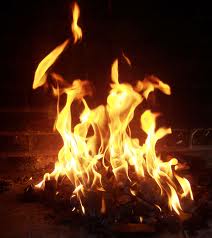
It’s Imbolc again. Every time the wheel turns I feel a deep sense of the familiar; the time of year, the inevitable reflection upon all that has transpired between this time of year and last, the opportunity to re-acquaint myself with all that this Festival is about; Fire, New Beginnings, Creativity, Poetry, Smith craft and Healing.

Thankfully the Fire has returned!

I am reminded of yet another traditional theme of this Esbat. Imbolc, as one of the cross-quarters of the Celtic calendar, is also traditionally understood to be a time of consecration and dedication. It is a time to initiate new projects and ‘seed through action’ that which we seek to manifest in the coming cycle. It’s time for blessing and acknowledging our tools, whether they be spade and hoe, pen and paper or hammer and forge. The burgeoning of Spring is, in fact, everywhere; Snowdrops are in full fledge, buds are budding. It’s so easy to see the life force rising in nature, but what of this thing called Dedication? Consecration?

This year, in anticipation of the celebration, I have been casting about looking for what it is that needs to be consecrated in my world. I have been made aware, in the past few weeks, of quite how deep and dark and turbulent the winter has been, more perhaps, a description of my inner landscape than without. Uncertainty, isolation, impatience for new growth and signs of life; the very real cold has never been far from my door. It dawned on me today that rather than a tool or a ‘thing’ it is I who needs, indeed yearns for that consecration; it is I, that rising from the cold dark time of winter past, needs to honour the fire within and burn-off the doubts, fears and anxieties that have taken hold. It is I, that seeks re-dedication; to hope, to life and to trust. In the past I have been able to relate to and embrace the poetic, the healing aspects of Brigid’s Feast Day. This year I am learning about the hammer and the forge, not through the smithy but rather through the furnace of life. It is I upon the forge, it is I swinging the hammer but it is the Goddess in the Fire.

And so, I shall begin again, remembering that I have everything I need for the creation of new life. These next weeks will not be a time for complacency, these tender shoots will require constant tending and protection. But for now, for today, I dedicate myself anew to trust, hope and an abiding sense of connection to all of creation.

After all, Spring IS on it’s way!Imbolc fire

Homoeopathy for the Home

Kitchen Table Homoeopathy with Marlow Purves

It’s the new year and new ‘things’ are brewing!

Beginning January 24th, I will be teaching a five week introductory course in Homoeopathy for the Home at Linton Village College.
 
Join me and learn about 36 basic first aid remedies that can be used to treat a wide range of common and acute ailments, gently, safely and effectively.

Practical effective treatment based on age old principles; treat yourself and your loved ones with confidence.

We have a lot of fun and cover a wide range of topics in contemporary healthcare.

Make 2013 a year to take stewardship of your health! 

For more information and to register: http://lvcacl.co.uk/?wpsc_product_category=health_and_fitness

Looking forward to seeing you there!

Homoeopathy and Physiotherapy

Homoeopathy and Physiotherapy

Physiotherapy is generally reckoned to be a physical treatment focused on mechanical injuries and remedial exercise regimens. Often the impediments to treatment lie in the effects of acute inflammation and occasionally the tearing or damage to soft tissue. Homoeopathy finds its place in just such cases and therefore provides an ideal complement to structural re-education and manipulation.

Anti-inflammatories and painkillers sometimes mask symptoms and thereby predispose one to further injury due to lack of awareness of the extent of the damage. Drowsiness and addiction due to medication also concern those who experience repeated injury patterns.

Homoeopathic remedies prove invaluable allies in the treatment of a traumatic injury, muscle strain or damage to soft tissue. They are safe, gentle and effective and have been proven for over 200 years.

Remedies for Injury or Trauma –

Arnica – Damage to soft tissue, bruising, shock, swelling, internal bleeding. It is the number one remedy to consider in head injury or concussion.

Bryonia – Severe pain from broken bones. Joints that are red, swollen and hot and much WORSE for the least movement. Dryness. Swelling of elbows and stiff and painful knees. These complaints come on slowly as opposed to being a result of a dramatic injury pattern. The pains are much better for hard pressure.

Hypericum – Commonly known as St John’s Wort, Hypericum is a per-eminent remedy for damage to nerve endings. It is particularity useful post-epidural or where there has been crushing injuries to parts rich in nerve endings. Bites, shock, dental work or lacerations. It also has a particular application in the case of injury or concussion of the spine or coccyx.

Rhus Tox – Sprains, strains, damage to fibrous tissue, joints, tendons and sheaths producing pain and stiffness. The person may be restless and much better for slow continued motion rather than being still. First of the season strains where the muscles are unused to work and stiffness is a keynote feature.

Ruta Grav – Injured or bruised bones, a wonderful remedy for strained flexor tendons, joints, ankles, wrists and cartilage. Lameness after strains. Specific affinity with damage to wrists and small joints.

Homoeopathic remedies are available as part of Homoeopathic First Aid kits or over-the-counter in health food shops and pharmacies, they can make all the difference in terms of time ‘off the pitch’. In the event of an injury, consult a qualified physiotherapist and remember the magic of the minimum dose!

Whooping cough vaccination in Pregnancy – A second look

A hot topic in the media and in my practice these days seems to be centred around the launch of the campaign to vaccinate pregnant women against whooping cough. I am receiving lots of enquiries and questions about this latest fashion in antenatal care.

Whooping cough, for those of us who have never seen it or really know what it ‘looks like’ is an illness that is typically found in children, though adults do experience it too. It is typified by a paroxysmal cough that is intermittent and characterized by a violent cough followed by a distinctive ‘whoop-ing’ sound. The cough, which is exhausting, can also be accompanied by vomiting of mucous. The symptoms, if left untreated, can continue on for up to three months. The illness is associated with the Bordetella pertussis bacteria. Whooping cough is not generally considered to be fatal though it has been associated with deaths in very young infants (0-3 months of age).

So, now we know what we are talking about, right?! Here’s the current situation. In the past year in the UK, there have been ten deaths attributed to whooping cough in infants. I have not been able to track down whether or not these infants had already been immunized or not as there doesn’t seem to be any publicly-available record of their ages or their over-all state of health. It is an horrific and sorrowful thought that small children should succumb to such an illness, though it is considered too dangerous to vaccinate babies before two months of age: quite simply they do not have an immune system sufficiently well-developed to cope with the direct effects of the vaccine itself. The solution to the problem of vulnerable children under the age of two months is to vaccinate their mothers while they 28-38 weeks pregnant.

OR NOT…

In the final months of development in utero, the lungs are developing and the organs are coming on-line in preparation for the new adventure.

For the most part, we as women strive to ensure our highest levels of self-care during our pregnancy. We eschew alcohol, take supplements, make sure we sleep as much as possible and see our mid-wives and doctors regularly. We quit smoking and may begin ante-natal yoga classes for relaxation and overall health. Books inform us that long-distance travel poses threats and that a calm mummy makes for a calm baby. It is confusing, therefore, that we find conventional medicine advocating the injection of Repevax (the trade name of the vaccine), which supposedly confers immunity from diphtheria, pertussis, tetanus and polio. It is, in fact, a quadruple vaccine though we are only told about its application in view of pertussis (whooping cough) in its application in pregnant women. The pharmacological literature says that it is not recommended for children under three years of age or who have not received their first immunizations. It is a highly controversial vaccination even for it’s ‘target’ market and has been linked with many symptoms such as convulsions, brain damage, anaphylactic shock, among others. (DPT:A Shot in the Dark, B.L.Fischer and H.L. Coulter, 1985).

There is solid clinical evidence to suggest considerable risks and downsides to the pertussis vaccine in infants, and there is no evidence to suggest that this vaccine does ‘what it says on the label’. As happened with Thalidomide, women and their unborn children are once more being used as test cases for a theory.

“…the vaccine was judged to work less than three-quarters of the time (New England J Medicine, 1995; 333: 1045-50) and it was only 55 percent effective after two doses.” The Vaccination Bible, Ed. Lynne McTaggart, WDDTY 2000.

The other question that emerges in some of my conversations is, ‘why are we doing this?’ Are we, in effect, vaccinating to allay parents’ fear of whooping cough rather than because it is known actually to be effective?

By far the single most effective protection against childhood illness (and free at the point of delivery!) is breast milk. Breast feeding confers immunity through the mother’s own system for the most vulnerable months of our young lives: natural immunity that is adaptive in the way that artificial immunity is not. If the symptoms of whooping cough do develop, homoeopathy has a number of extremely well documented remedies to offer. Homoeopathy has been used to great effect for over 200 years providing safe, gentle AND effective healing, regardless of age..

Trick or Treat and the Old Ways

Trick or Treat. What connection can this have to the old ways? Wandering from door to door begging or ‘souling’ for food and fuel in return for a blessing upon those who have crossed over, we pay homage to our ancestors. Embedded in our understanding of life, in times past, we have always been supremely aware of our relationship to our ancestors and to those who have passed before us. An essential part of that remembrance comes in sharing food and sustenance. As life is associated with eating, so we symbolically feed the ancestors. In cultures all over the world throughout history there is a tradition of leaving food for the ancestors, in Japan, China, Egypt, Australia, the Americas. This custom not only links us to those who have gone before, but it is an assurance that when we pass, we too, will be enfolded in the memories and the traditions of our descendants.

Hallowe’en or Samhain (pronounced ‘sow-en’) is the third of the harvest festivals in the Celtic calendar where we salvage the seeds and take them into ourselves by literally eating them and saving some for planting in the Spring. By bringing the concentration of life force distilled in the seed into ourselves, we symbolically draw all that is most precious within while the seeds that we preserve for the next planting are invested in the promise of yet another sowing, another harvest.

As darkness grows and the sun recedes we enter a dangerous time – scarcity, cold and inevitable contraction. Samhain marks the tipping point into the darkening of the year. It is the moment when the veil between the worlds is thinnest offering us an opportunity to connect with the departed and renew our relationship with the dark; an acknowledgement of spiritual immortality and human frailty. During this powerful time of shadows and few definitions, dreaming and surrendering are the tasks that we are charged with.

Reach now for the guidance and support of those who have passed this way before. Prepare mindfully a place at your table for the ‘Gone Befores’.

Blessed Samhain.